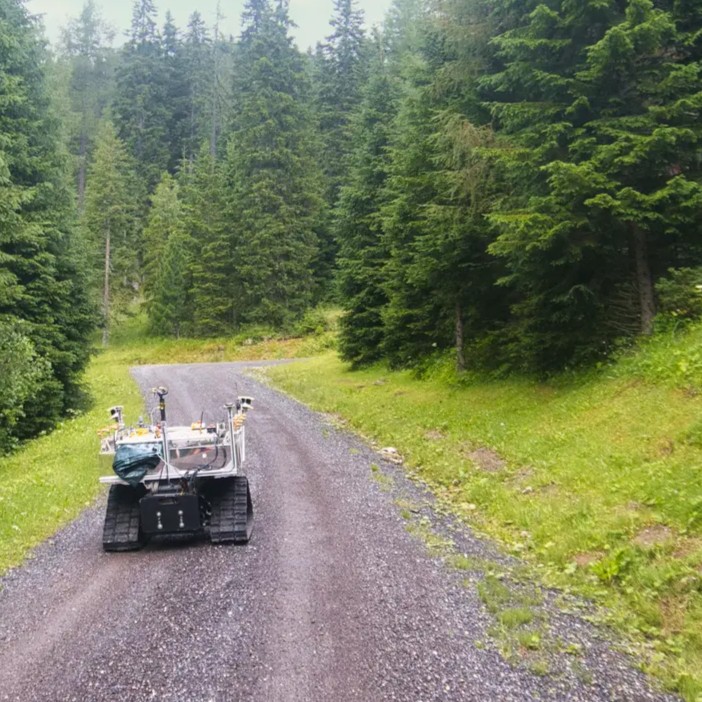


A tractor following a predefined path autonomously is impressive. But a reusable autonomy architecture that can be transferred to different machines, powertrains, environments, and tasks is what makes autonomous technology truly relevant for industry.
In the joint webinar “The Road to Driverless Off-Road Vehicles”, ARTI and AVL presented how manufacturers can move from individual automated functions toward scalable off-road autonomy. As outlined in our first blog post, this approach centers on AVL’s Generic Off-Road Automation System (GOAS), complemented by ARTI’s technologies for mapping, localization, and autonomous navigation. Learn more about it here: Agriculture meets Autonomy
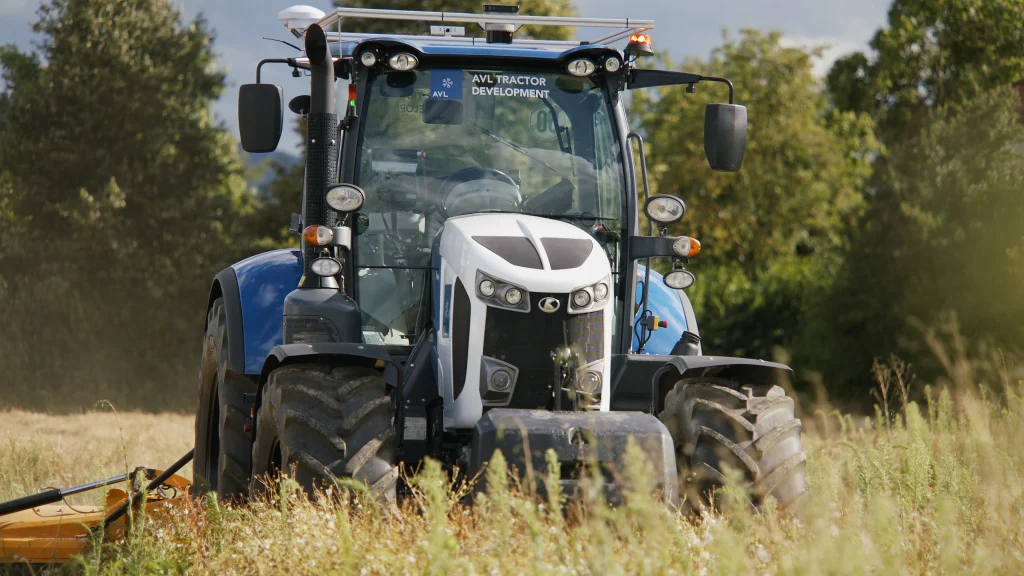
The webinar also demonstrated that this is more than a theoretical architecture, showcasing how modular autonomy can be implemented on both the AVL eTractor platform and a conventional tractor model.
Why Off-Road Autonomy Matters Now
Agriculture and other off-road industries face several challenges at the same time. Skilled operators are becoming increasingly difficult to find, operating costs are rising, and many tasks must be completed within narrow seasonal or weather-dependent time windows.
Autonomous machines can help make better use of the available working day. They can maintain consistent performance, operate for longer periods, and execute repetitive processes without the variations that naturally occur during a long shift. More repeatable operation can also reduce unnecessary stress on the vehicle and its components.
However, the objective is not limited to autonomous movement. Process automation enables agricultural vehicles to perform, monitor, and continuously optimize the actual task using vehicle, sensor, environmental, and historical data. Teach-in functions can transfer procedures demonstrated by experienced operators, while ongoing monitoring of machine condition, safety, and work quality allows the process to be adapted and improved over time.
This does not mean that every task should immediately be automated. The webinar highlights a practical starting point: focus first on tasks with a long duration and manageable complexity. In agriculture, this includes activities such as soil cultivation, seeding, and spraying. Highly unpredictable operations that require complex handling and expert judgment remain better suited to skilled operators.
The objective is therefore not simply to remove the operator. It is to use automation where it provides the greatest benefit and allow qualified personnel to concentrate on the tasks where their expertise matters most.
The Real Challenge: Scaling Beyond a Prototype
Building one autonomous demonstrator is one thing. Transferring the same capabilities to an entire vehicle portfolio is considerably more difficult.
Off-road fleets are highly heterogeneous. Machines differ in size, age, vehicle architecture, steering systems, hydraulic components, implements, sensors, and powertrains.
Manufacturers also need to address functional safety, regulatory requirements, expensive field tests, limited seasonal testing opportunities, and increasing time-to-market pressure.
Developing a completely new autonomy solution for every machine would lead to repeated engineering work, high validation costs, and difficult-to-maintain software variants.
The AVL GOAS System addresses this problem through a modular, vehicle-agnostic architecture. Autonomous capabilities such as localization, navigation, obstacle handling, path following, and task execution are structured as reusable skills. Vehicle-specific interfaces can then be adapted without redesigning the complete autonomy stack.
A Stepwise Route Toward Autonomous Operation
One of the webinar’s central messages is that autonomy should be introduced step by step rather than through a single “big-bang” development project.
The GOAS integration methodology starts with system engineering. The intended application and its Operational Design Domain, or ODD, are defined, the vehicle is analyzed, relevant data is collected, and an initial safety concept is developed.
The ODD specifies where and under which conditions the vehicle may operate. This directly influences the required sensors, vehicle behavior, and safety mechanisms.
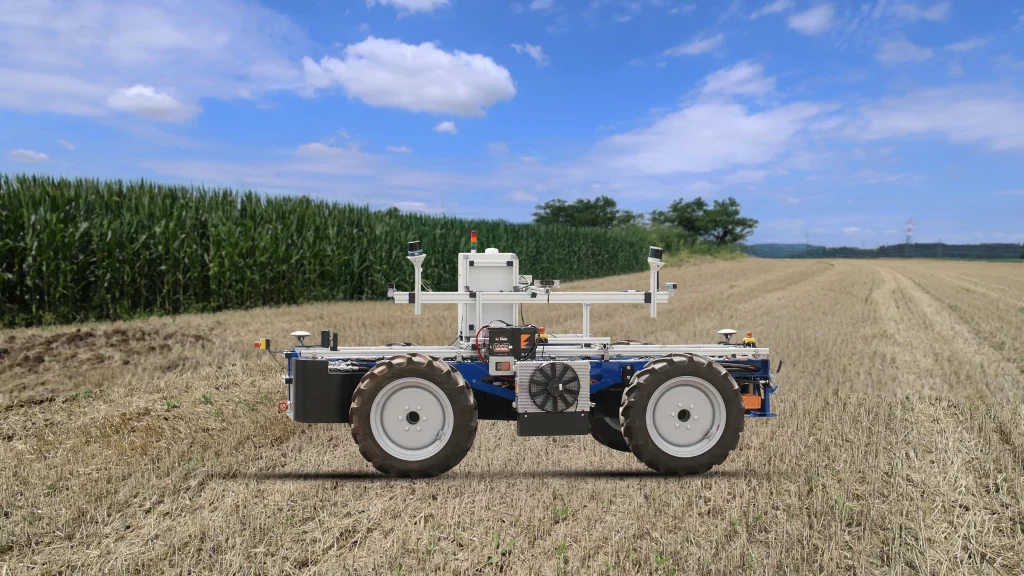
A tractor operating close to a farmhouse may encounter pedestrians, tight corners, and mixed traffic. It therefore requires richer environmental perception and more conservative behavior. The same tractor working in structured rows on an open field operates in a less complex environment and may achieve the required level of safety with a different sensor configuration.
The final stage extends automated driving to automated task execution. The machine no longer only drives to a target position—it also operates its implement and completes a defined work process.
ARTI’s Contribution: Autonomous Navigation in all Aspects
Reliable localization is one of the foundations of autonomous operation. An off-road vehicle must continuously understand its position and orientation, even across large environments and under changing outdoor conditions.
ARTI contributes technologies for creating high-quality two- and three-dimensional maps from real operating environments. These maps provide the foundation for precise localization, planning, and autonomous navigation.
Depending on the application, different combinations of LiDAR, GPS, RTK, IMU, radar, beacons, and other sensors can be used. A multimodal configuration prevents the complete localization system from depending on a single source.
When GPS reception degrades near buildings, vegetation, or other structures, additional sensors can continue to support the vehicle’s position estimate. Conversely, satellite-based positioning can provide valuable information in open environments.
ARTI’s navigation software then takes the vehicle from its starting position to its destination. It is designed for large operating areas, supports different drive mechanics, and includes functions such as dynamic mapping, path planning, collision avoidance, system diagnostics, and interfaces for fleet management.
The same fundamental software capabilities are not limited to one specific tractor or vehicle geometry. This hardware-agnostic approach is an essential part of transferring autonomy between different platforms.
Simulation as the Bridge to the Field
Physical testing remains indispensable, but relying exclusively on field tests would make the development of autonomous heavy machinery slow and expensive.
Seasonal availability, weather, safety considerations, and limited access to prototype vehicles restrict how many scenarios can be evaluated in the real world. Rare or critical events are also difficult to reproduce consistently.
Simulation makes it possible to begin testing much earlier. Virtual environments can reproduce crop structures, soil conditions, lighting, weather, obstacles, and different operating scenarios. Vehicle-dynamics models can be used to evaluate stability, precision, and energy consumption before new software is deployed on the physical machine.
Repeatable virtual tests also make it easier to verify software updates and identify unwanted changes. Validated autonomy skills can then be transferred to additional platforms through standardized middleware and vehicle interfaces.
Simulation does not replace real-world testing. It makes field validation more focused, repeatable, and efficient.
Combining Robotics Software and Vehicle Engineering
The collaboration between ARTI and AVL brings together complementary expertise.
AVL contributes system engineering, vehicle development, safety concepts, simulation, integration, testing, and the pathway toward industrial implementation. ARTI contributes flexible robotics software for mapping, high-precision outdoor localization, autonomous navigation, obstacle avoidance, and fleet connectivity.
Together, these capabilities provide OEMs with a structured route from the initial use-case definition to vehicle integration, automated task execution, and preparation for series development.
The result is not a one-off autonomous tractor. It is a reusable foundation that can reduce repeated engineering work, shorten validation cycles, and support the introduction of autonomous functions across different off-road platforms.
At ARTI, we are proud to contribute our robotics expertise to this collaboration and to help turn autonomous off-road technology into scalable, real-world solutions.
Are you developing an autonomous off-road vehicle or planning to add autonomous capabilities to an existing machine? Let’s talk about how ARTI’s mapping, localization, navigation, and simulation technologies can support your application.