

In environments like substations, industrial facilities, or emergency zones, inspection tasks often require precise situational awareness and fast decision‑making. While mobile robots are becoming more common in these scenarios, they still face a major limitation: they cannot process all sensor data on‑board – especially when advanced AI models are involved.
The FFG project LAISA‑5G (Low‑Latency AI‑based Situation Awareness on 5G Data Streaming) addresses exactly this challenge. In collaboration with JOANNEUM RESEARCH, ARTI – Autonomous Robot Technology GmbH is helping develop a new approach: Robots stream their sensor data via 5G to a powerful cloud service, the data is processed in real time using advanced AI methods, and actionable insights are sent back to the robot within split seconds.
This unlocks a new level of navigation support and inspection capability—without requiring heavy computing hardware on the robot itself.
The Core Idea: Real-Time Insight Through 5G
Traditional mobile robots rely mostly on local processing, which limits what they can “see,” understand, and react to. LAISA‑5G introduces a different architecture:
Instead of handling all computation on board, the robot streams its live video and sensor data—such as RGB‑D images, LiDAR scans, and radar signals directly to the cloud using high‑bandwidth 5G connectivity. There, advanced AI models analyze the incoming data in real time, identifying relevant features, components, or objects within the environment. The cloud then sends this refined, high‑level information back to the robot within split seconds, giving it immediate guidance to support safer navigation and more informed decisions.
This means the robot doesn’t need to run large neural networks itself. Instead, it benefits from powerful cloud intelligence, enabled by the high bandwidth and low latency of 5G.
Why this Matters for Inspection Robotics
Inspection tasks place high demands on a robot’s ability to understand its surroundings. They often require the precise detection of equipment or potential anomalies, even when visual conditions or structural layouts vary. At the same time, robots must operate reliably in environments that may be unfamiliar, dynamic, or partially unpredictable, adapting their behavior as conditions change. To be effective, they also need to respond quickly to new information, whether it’s a detected obstacle, a shifting hazard, or an updated inspection target. And throughout the process, the robot must maintain safe navigation around sensitive or potentially dangerous infrastructure, ensuring both operational safety and the integrity of the facility it is examining.
With real‑time cloud AI, LAISA‑5G gives mobile robots a level of awareness they simply cannot achieve through on‑board processing alone. By offloading perception tasks to the cloud, robots can receive semantically rich information that helps them understand what matters in their environment, rather than working solely with raw sensor data. This cloud‑supported insight arrives faster than locally executed algorithms could provide, enabling robots to react more quickly and confidently in inspection scenarios.
At the same time, shifting computation away from the robot means the hardware can remain lighter, more energy‑efficient, and easier to maintain, without sacrificing capability. And because the robot continuously receives refined perception results from the cloud, it can navigate more safely and robustly, even in environments that are complex, cluttered, or constantly changing.
The result: a more capable inspection robot that can perform tasks with confidence and clarity, without carrying a supercomputer on its back.
ARTI’s Contribution: Navigation Powered by Cloud Awareness
As the industrial partner, ARTI focuses on integrating this cloud‑powered perception into real‑world robot navigation.
ARTI contributes three main strengths:
1. ARTI AI Kits for Autonomous Navigation
ARTI’s navigation and perception modules form the basis for turning cloud insights into real robot behavior—such as adjusting paths, avoiding obstacles, or approaching target components.
2. 5G‑Integrated System Architecture
ARTI ensures that the robot platform, the sensors, and the communication stack work seamlessly with the 5G network and cloud infrastructure. This is essential for achieving truly low‑latency operation, where navigation can react instantly to AI feedback.
3. Real‑World Testing on Mobile Robotic Platforms
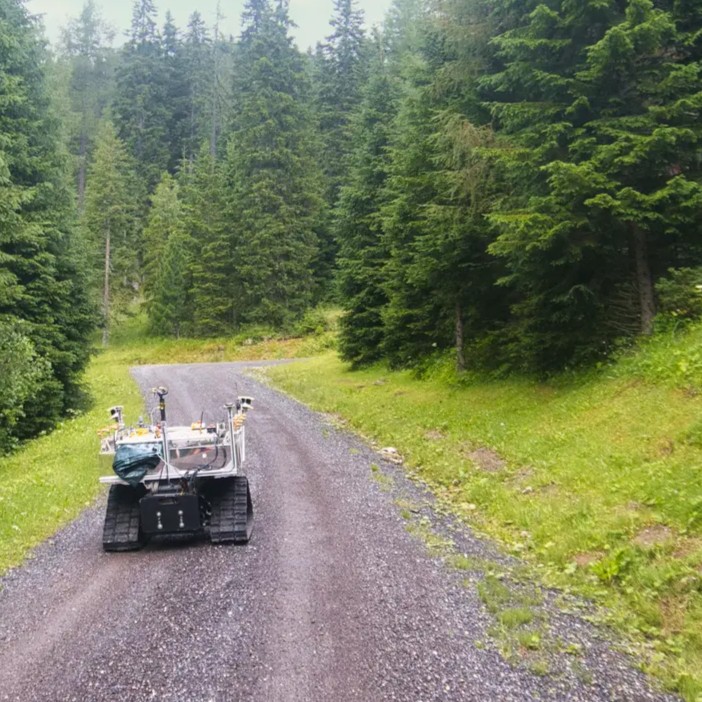
ARTI provides a functional hardware demonstrator equipped with sensor systems and 5G connectivity, enabling practical testing of the cloud‑based workflow in inspection scenarios.
In short: ARTI makes sure the robot can take the right action once the cloud provides the right information.
What LAISA-5G Means for ARTI
For ARTI, LAISA‑5G represents an important strategic step in advancing its technology and product landscape. The project enables ARTI to expand its AI Kits with new cloud‑integrated capabilities, allowing the company to combine proven navigation software with real‑time perception delivered through 5G streaming. It also offers the opportunity to validate 5G‑supported navigation in real inspection scenarios, demonstrating how low‑latency cloud insights can enhance the robot’s ability to move safely and efficiently through complex environments.
Beyond the technical advances, the project opens the door to new business opportunities across inspection robotics and emerging fields such as remote or assisted operation—domains where reliable cloud‑based perception can become a decisive differentiator. At the same time, LAISA‑5G strengthens ARTIs positioning within the DACH robotics ecosystem, further establishing the company as a leading innovator in autonomy operations in challenging environments.
The project enables ARTI to integrate next‑generation perception technologies without overloading the robot hardware—opening the door to lighter, smarter, and more versatile inspection robots.
Impact for Industry & Research
For industrial operators, LAISA‑5G offers several tangible benefits that directly enhance safety, efficiency, and operational reliability. By shifting complex perception tasks to the cloud, the system supports safer inspections in high‑risk environments, reducing the exposure of human personnel to hazardous areas. The ability to process and interpret sensor data in real time also enables the faster detection of potential issues, helping operators identify anomalies before they escalate. In addition, cloud‑based analysis ensures consistent and well‑documented inspection quality, as the intelligence guiding the robot’s decisions is centrally maintained and continuously available. Because the heavy computation does not need to run on the robot itself, operators can also benefit from lower hardware costs, resulting in lighter and more economical robotic platforms.
Conclusion
LAISA‑5G demonstrates the power of combining 5G data streaming with cloud‑based AI to support mobile robots in complex inspection environments.
Instead of relying on heavy on‑board computation, robots can now stream what they see, receive instant insights, and act with a new level of awareness.
Together with JOANNEUM RESEARCH, ARTI is helping shape a future where inspection robots move more safely, understand more clearly, and operate more effectively—powered by the speed of 5G and the intelligence of the cloud.
Links
Partners

The project LAISA-5G – Low-Latency AI based Situatition Awareness on 5G data streaming was funded by the the FFG – Austrian Research Promotion Agency.